
Project Needs and Benefits
UWMC – Northwest first opened in 1960 as Northwest Hospital. Since then, the 33-acre campus has experienced several phases of growth and building development. Approved in 1991, the current Major Institution Master Plan (MIMP) was in place when the campus first integrated with the UW Medicine system in 2009. The site officially became UWMC – Northwest in January 2020.
Located in the Northgate and Haller Lake neighborhoods of North Seattle, UWMC – Northwest is the go-to medical center for many communities in King County and south Snohomish County.
A new MIMP is needed to replace the 30‑year‑old document and guide future redevelopment of the UWMC – Northwest campus. An updated master plan will benefit patients, employees and the community. Undertaking a new master planning process will address the following:
- Supporting the projected growth in the UWMC – Northwest service area while maintaining a positive campus experience for patients, visitors, staff and the community.
- Maintaining excellent healthcare services while updating or replacing aging buildings.
- Improving on-site infrastructure to provide a more sustainable approach to campus systems for existing facilities and future development.
- Managing multiple transportation needs on campus, including ambulances, deliveries and transit, and improving campus circulation and wayfinding.
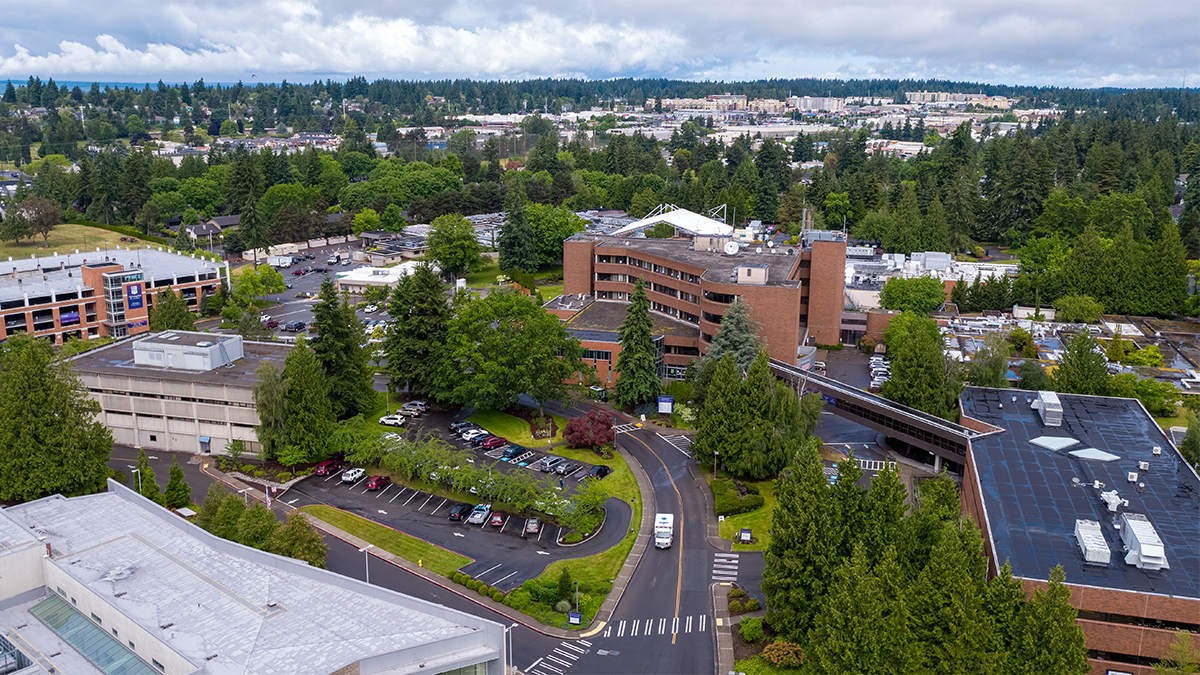
An aerial view of the campus and main buildings.
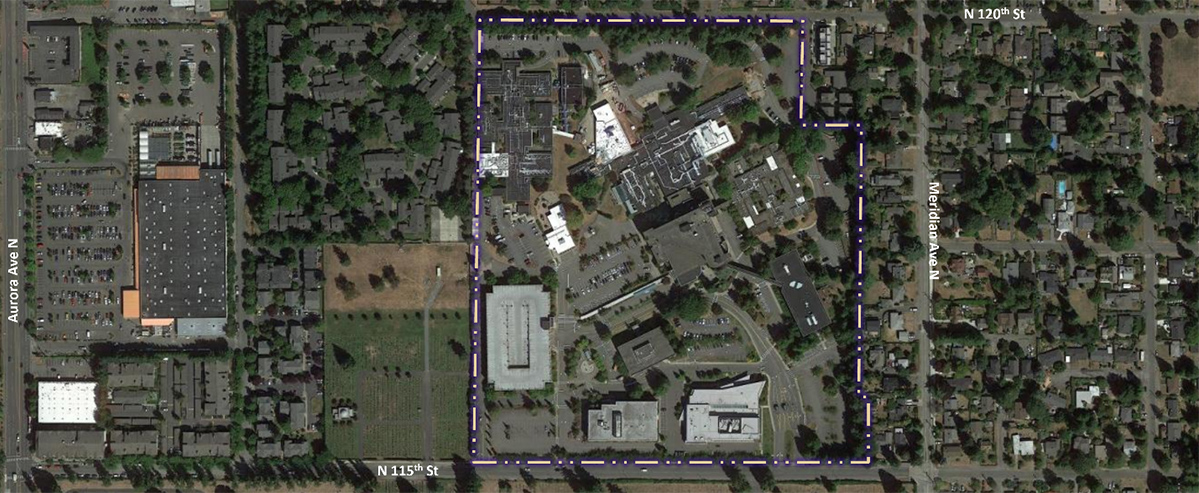
An aerial view of the campus.
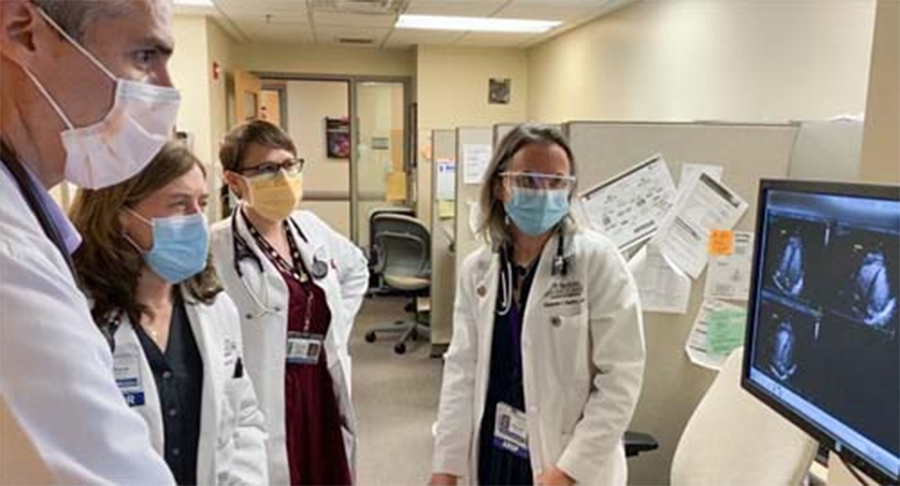
UWMC – Northwest campus growth is key to providing capacity for highly specialized care for the region and state.
The University of Washington has determined that it will develop an Environmental Impact Statement (EIS) to examine potential environmental impacts as we consider how to update the UWMC – Northwest campus. The EIS is required under the State Environmental Policy Act (SEPA) in Washington state. The Draft EIS examines alternatives and the potential effects on several elements of the environment. Public comments will inform the refinement of the final MIMP and EIS. The full Draft Environmental Impact Statement is available at the UW Facilities website: facilities.uw.edu/Northwest-MIMP.
What is an EIS?
An EIS is a planning tool in the decision-making process to identify potentially significant environmental impacts, unavoidable impacts, mitigation measures, as well as indirect, cumulative, and construction-related impacts. An EIS does not authorize a specific action, nor does it recommend for or against a particular course of action.
Scoping: An EIS has several steps. The first is called “scoping.” Scoping identifies all the potential environmental impacts of a project, development, or master plan, like this one. Scoping helps narrow down which significant environmental issues UW Medicine will study. UW Medicine will design several possible campus plan “alternatives” and evaluate how those issues will be addressed.
DEIS: The alternatives are then examined in a draft EIS (DEIS). The DEIS is distributed to public agencies (federal, state, regional, city) and tribes, organizations, and the public for a review and comment period. A public meeting will be held, following the issuance of the DEIS, to gather comments regarding the alternatives.
FEIS: The final EIS (FEIS) is the third and final part of the EIS process. After analyzing public comments and additional data, UW Medicine will issue a FEIS.
Issue Determination of Significance and Scoping Notice
Conduct SEPA Scoping
Prepare and Issue Draft EIS
Draft EIS Public Comment Period
Prepare and Issue Final EIS